Optimization of your Electric Motor production

Electric Motor production Optimization – the key for increased market shares

The more products with electric motors (especially for cars) establish themselves on the market, the more they compete with each other. It is not enough anymore to manufacture electric motors as standard. The big market competition requires constant production optimization and cost reductions. But on the other hand, many highly automated assembly lines do not archive their target OEE – there is a problem with the overall effectiveness.

Reality vs. Plan with electric motor production optimization as a lever

In addition, the cycle time of manual workstations is often (much) higher than originally planned and this is also effecting the overall cycle time of the assembly lines. The fact that the ergonomics of manual workstations are borderline also leads to a lot of absenteeism here. These are all weighty reasons that speak for electric motor production optimization, because our experience has shown that there is a high optimization potential here. Promotex Consulting advises electric motor manufacturers to optimize their production processes in such a way that this can strengthen our customers market position
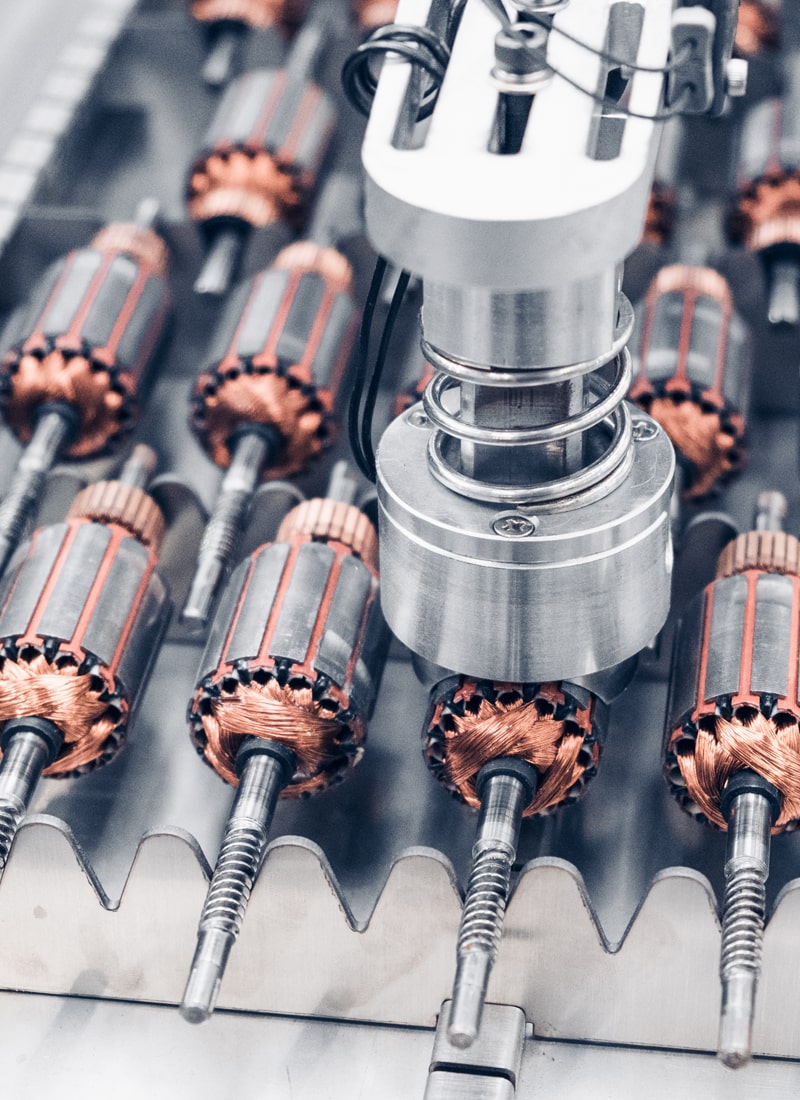
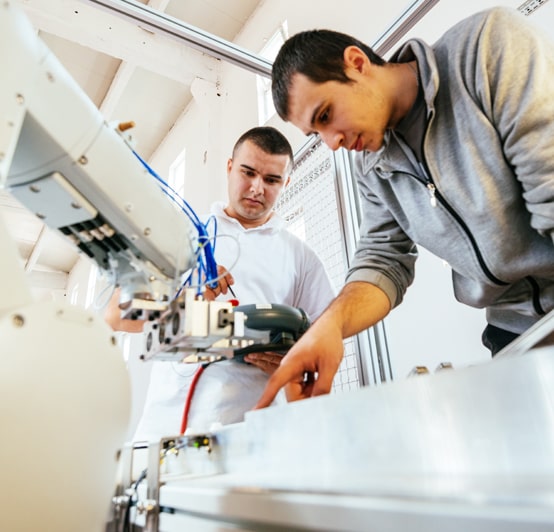
Electric Motor production Optimization by Promotex

How Promotex supports to optimize electric motor production costs

There is no question that cost efficiency is the main driver for your market competitiveness. Without requiring high investments, we work with your team to optimize existing manufacturing concepts. Additionally, we are improving the workplace ergonomics in order to react on the aging society and to reduce absenteeism rates. We also continue to support you in the design of the electric motor components with the aim of reducing manufacturing costs.

Electric Motor production Optimization

Promotex Consulting – your product optimization partner

What makes Promotex Consulting GmbH special is our extensive production knowledge along the entire value chain for electric motors. Therefor we use our wide process knowledge of the electric motor production. So we know exactly what we are talking about – and we know typical “gaps” in the process.

From this, we have developed a unique production optimization approach to reduce cycle times from which your company can benefit. With extensive theoretical, but above all practical knowledge of optimizing manual workstations in terms of cycle time and ergonomics, we succeed developing real advantages for our customers in terms of cycle time reduction and costs. Coupled with our extensive theoretical and practical knowledge of optimizing highly automated systems, we create optimized processes for real benefits on the market. Contact us now for electric motor production optimization. We are ready for your optimization road map!

Short FAQ on Electric Motor Cost Optimization

Efficiency improvements are primarily achieved by optimizing the level of automation, implementing lean management principles, reducing cycle times, and minimizing changeover and setup times. A key lever is also the selection of the appropriate manufacturing technology for the approximately 40 different production processes within an electric motor line, enabling shorter cycle times.

The most important lever is the identification and elimination of bottlenecks in the assembly line through line balancing. By harmonizing cycle times at stations such as the stator line, rotor line, and motor assembly line, work-in-progress (WIP) inventory is significantly reduced.

Design for Manufacturing ensures that the motor design is aligned with the requirements of automated series production already during the development phase. This prevents costly rework in the production process and enables scalable manufacturing.

Through economies of scale and the transition from manual to highly automated production, fixed costs per unit decrease significantly. Professional production optimization ensures that manufacturing lines can respond flexibly to volume changes without compromising overall equipment effectiveness (OEE).

Checklist: Is Your Electric Motor Production Ready for the Next Level of Efficiency?

Use this checklist for an initial self-assessment of your electric motor production. The more questions you answer with “Yes,” the greater the optimization potential.

1. Production KPIs & OEE

  • Your production system does not consistently achieve the planned OEE.

  • Downtime, Micro stops, or rework are not systematically analyzed.

  • The causes of deviations between planning and actual performance are not clearly quantified.

  • OEE improvement initiatives fail despite a high degree of automation.

2. Cycle Times & Line Balancing

  • Manual workstations have longer cycle times than originally planned.

  • Cycle times between stator, rotor, and motor assembly lines are not harmonized.

  • Bottlenecks are known but not sustainably eliminated.

  • Work-in-progress (WIP) inventory levels are higher than necessary.

3. Degree of Automation & Manufacturing Concept

  • The level of automation has evolved historically but is not strategically defined.

  • It is unclear which of the approximately 40 manufacturing processes should be manual, semi-automated, or fully automated.

  • Highly automated systems do not achieve the expected output volumes.

  • Changeover and setup times significantly limit production flexibility.

4. Ergonomics & Manual Workstations

  • Ergonomic aspects were only given secondary consideration in workstation design.

  • High physical strain leads to absenteeism or quality deviations.

  • Manual processes are not optimally designed to meet required cycle times.

  • Demographic change is not yet a structured factor in production planning.

5. Product Design & Design for Manufacturing (DfM)

  • The electric motor design has not been consistently optimized for series production.

  • Design changes regularly result in additional production effort.

  • Components are functionally correct but not cost-optimized from a manufacturing perspective.

  • DfM principles are not systematically applied during development.

6. Scaling & Unit Costs

  • Unit costs do not decrease proportionally with increasing production quantities.

  • The transition from manual to automated production is not clearly planned.

  • Production lines respond inflexibly to volume fluctuations.

  • Fixed costs impact competitiveness more strongly than expected.

Checklist Evaluation

  • 0–5 applicable points:
    Solid baseline – selective optimizations possible.
  • 6–12 applicable points:
    Significant efficiency and cost optimization potential identified.
  • 13+ applicable points:
    Structured production optimization strongly recommended
    In these cases, Promotex Consulting supports you with a holistic analysis of your electric motor production – from manual workstations to highly automated systems across the entire value chain.

Next Step

If you would like to further deepen your answers or identify concrete savings potential, Promotex Consulting supports you with a comprehensive electric motor cost optimization approach – from analysis through implementation.

Do not hesitate to contact us about production optimization

Feel free to contact us about your challenges: Together with you, we analyze your electric motor production so that you can “get out” more efficiency!


    * - required fields

    Disclaimer:

    Which process can be optimized in your production in such a way that it brings cycle time and cost advantages? Whether the process of assembly, the production system as a whole must be optimized on the basis of valid data, we determine for you in our comprehensive analysis. However, we do not only focus on the theoretical data in our work, but also realizing together with you real actions in your production.

    Making production more efficient for every relevant product is our goal. Every new solution that represents an optimization for an area of your production can become an advantage on the market.